Digital Nomad
What Is a Digital Nomad? Jobs, Skills, and How to Get Started

Aravind Aby
July 1, 2026
9
Min to read
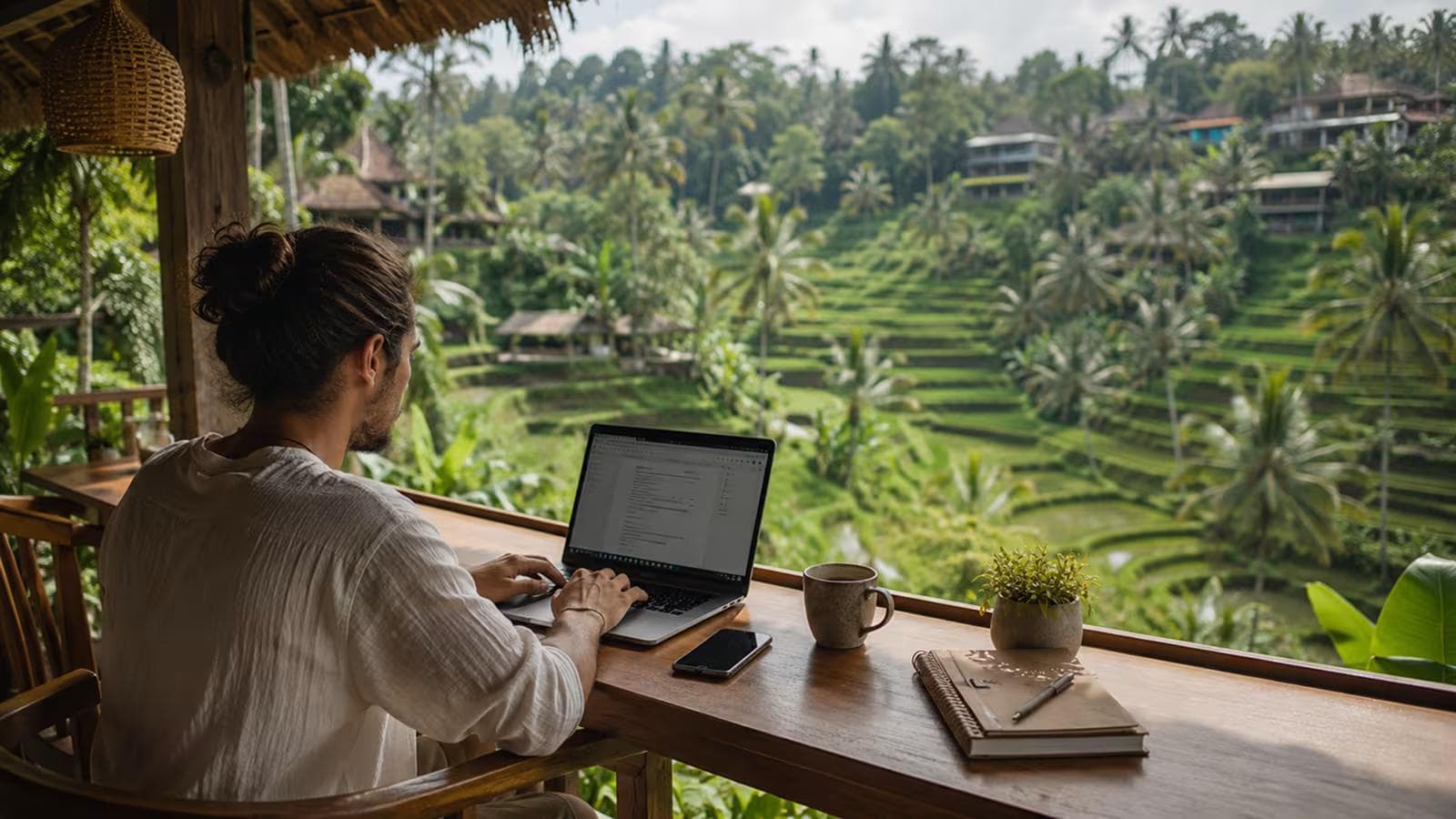
Remote work made working from anywhere possible. Not just business trips or month-long vacations with a laptop, but actually living abroad while doing a full-time job. So what is a digital nomad? Someone who has built that exact setup: a full-time income source they can take with them, and the freedom to work from anywhere in the world.
This digital nomad guide covers what they actually do for work, the skills that make the remote work lifestyle sustainable, and the practical steps to get started. It's not a fantasy version of the lifestyle. It's the version that holds up after the first six months.
What Is a Digital Nomad?
A digital nomad is a professional who works fully remote and travels regularly, often living in multiple countries throughout the year. The defining trait isn't the travel; it's the combination of a full-time income and the ability to do that work from anywhere with decent internet.
That distinction matters because it separates digital nomads from a few groups that look similar but aren't:
- Remote workers stay put. They work from home in one city, not a new country every few months.
- Freelancers may or may not travel. Freelancing is about the income model. Digital nomad life is about the lifestyle.
- Expats move abroad and stay. Most digital nomads keep moving, spending two to six months in each location before relocating to the next.
- Workationers take their work on a trip for a few weeks to two months, then go home. The trip is the exception, not the lifestyle.
The category fits people who have built or found jobs that let them work from anywhere, then chosen to use that flexibility to travel continuously.
Digital Nomad Jobs: What They Actually Do
Most digital nomad jobs fall into a handful of categories, all of them remote-friendly by nature. These aren't the only paths, but they account for the majority of full-time digital nomads.
- Software engineering and development. The largest category by far. Most software jobs are now remote-eligible, and many companies hire from anywhere in the world.
- Product and project management. Coordinating teams and shipping software doesn't require a physical office. Most product roles at remote-first companies are location-independent.
- Design. UX, UI, brand, and graphic design all transfer well to remote work. Communication tools and async workflows handle most collaboration needs.
- Content writing and copywriting. Writers, editors, and content marketers can work from anywhere with a laptop and a strong internet connection.
- Digital marketing and SEO. Performance marketing, SEO, paid ads, and email are all done in the browser, with no physical work required.
- Customer support and success. Many companies hire fully remote customer-facing teams across multiple time zones.
- Online teaching and coaching. English teaching, coding bootcamps, business coaching, and tutoring can all be done over video calls.
- Consulting and freelance services. Independent consultants and service providers often have the most flexibility, since they set their own schedules.
- Founder or operator of an online business. E-commerce, SaaS, content businesses, and agencies are often run by digital nomads who built the income source themselves.
Work from anywhere jobs in these categories share a common thread: the work happens on a computer, the team is distributed, and the deliverables don't require being in a specific physical location.
Skills You Need to Make It Work
The lifestyle looks effortless from the outside. The reality requires a specific set of skills that don't all map to traditional career competencies.
- Self-management. No manager will check on you across time zones. Your output has to be visible without supervision, and your day has to run without someone setting the schedule.
- Async communication. Most digital nomad jobs involve teammates in multiple time zones. Writing clear updates, documenting decisions, and not depending on synchronous calls is the actual skill set.
- Financial discipline. Nomad life rewards saving and punishes overspending. Income often varies, expenses always do (different countries, different currencies), and there's no employer-provided safety net in many roles.
- Travel logistics. Booking flights, finding stays in new cities, dealing with visas, and managing time zones is its own ongoing skill. The administrative load is real.
- Adaptability under pressure. Power cuts during a deadline, internet failing during a call, last-minute visa issues. The people who thrive treat these as small problems, not crises.
- Loneliness management. Moving every few months means leaving newly-made friends regularly. Building routines around exercise, hobbies, and community is what makes the lifestyle sustainable past the first year.
The technical skills required depend on the job you do. The lifestyle skills above are universal across roles.
How to Become a Digital Nomad
Becoming a digital nomad isn't a single decision; it's a sequence of practical steps. Most people who fail at it skip ahead to the travel part before the other foundations are in place.
Step 1: Build a remote-friendly career or income source
Before anything else, you need a job or income source that doesn't require you to be in a specific location. If you're employed, talk to your manager about going fully remote, or find a new role at a remote-first company. If you freelance, build a roster of clients who don't need in-person work.
A common mistake is trying to start nomad life while still in a hybrid role. It rarely lasts. Lock in a fully remote arrangement first. If you're still job-hunting, RemoteAtlas lists genuinely remote roles from real company career pages and direct employer postings.
Step 2: Save a financial runway
Most established digital nomads recommend at least six months of expenses saved before leaving. Income gaps happen, especially in the first year. New countries also bring setup costs: deposits, flights, visa fees, and equipment replacement.
A runway also gives you the option to walk away from a bad contract or client without immediate panic. That option is what keeps the lifestyle sustainable.
Step 3: Choose your first destination
Pick somewhere with strong infrastructure for the lifestyle: reliable internet, affordable cost of living, an established nomad community, and reasonable visa options. Popular first destinations include Lisbon, Mexico City, Bali, Chiang Mai, Bangkok, and Medellín.
Don't go to a place that's hard to live in just because it's beautiful. The first six months are about building a stable routine, not maximizing scenery.
Step 4: Sort out visas
Many countries now offer dedicated digital nomad visas with one-to-two year stays for remote workers earning above a minimum income. Portugal, Spain, Estonia, Croatia, Costa Rica, Mexico, Barbados, the UAE, and Thailand all have versions. Some are easier to qualify for than others.
If you don't qualify for a digital nomad visa, tourist visas can work for shorter stays, but they have time limits. Plan your country sequence around what you're legally allowed to do.
Step 5: Set up the right tools
Before leaving, set up: a bank account that doesn't charge international fees, a credit card with no foreign transaction fees, a global health insurance plan, a portable backup for your internet (often a separate mobile hotspot), and an address service back home for mail. These are not optional. They're the operational foundation of the lifestyle.
Step 6: Plan your first move
Book your flight, secure accommodation for at least the first month, and tell anyone who needs to know (your employer, clients, and tax advisor). Don't overcommit to a six-month lease in a country you've never lived in. A one-month stay gives you the flexibility to leave early if it doesn't work.
Step 7: Build a routine that works
Once you're abroad, the same rules apply as any remote job: dedicated workspace, consistent hours, real breaks, exercise, sleep. The country changes; the system doesn't. The people who succeed long-term treat each new location as a place to live, not a place to vacation.
Frequently Asked Questions
1. How much do digital nomads earn?
It depends entirely on the role. A software engineer working for a US company while living in Thailand can clear $150K+ a year and live comfortably on a fraction of it. A freelance content writer or virtual assistant may earn $30K-$60K. The income range is wide because digital nomads include both salaried employees and freelancers across many fields.
2. What are the best countries for digital nomads?
The most popular are Portugal, Mexico, Thailand, Indonesia, Spain, Colombia, Vietnam, and Estonia. They share strong internet, affordable living costs, established nomad communities, and either dedicated nomad visas or favorable tourist visa terms. The best choice for you depends on your budget, the time zones your work requires, and how much you value community versus solitude.
3. Do digital nomads pay taxes?
Yes, almost always. Tax obligations depend on your citizenship, where you have legal residence, and how long you stay in each country. US citizens owe US taxes on worldwide income regardless of where they live, which is unusual: almost every other country uses residency-based taxation, usually determined by how many days you spend there. Talk to a tax advisor who understands international remote work before making any moves.
4. Is the digital nomad lifestyle sustainable long-term?
It can be, but most people don't stay fully nomadic forever. Many transition to a slower form after a few years: spending six to nine months in a base city and traveling the rest of the year. The pace of moving every two to three months becomes exhausting, and most people eventually want some form of community and continuity.
5. Is it lonely being a digital nomad?
It can be, especially in the first year. The community is real, though. Most popular nomad cities have established coworking spaces, regular meetups, and overlapping networks of nomads who become friends. Loneliness is less about the lifestyle and more about whether you build a routine that includes other people. The ones who treat travel as escapism tend to burn out faster than those who treat it as a long-term life setup.
Build the Career First
The hardest part of becoming a digital nomad isn't the travel. It's having a job that lets you do it. Everything else, from visas to accommodation to community, becomes solvable once your income source is genuinely location-independent. If you're looking for that kind of role, browse work from anywhere jobs on RemoteAtlas, free for job seekers.
Aravind Aby
Aravind Aby is the Founder of RemoteAtlas. With experience across marketing, sales, and product development, he has helped startups acquire customers, build their brands, and scale from the ground up, while also launching products of his own. He founded RemoteAtlas with a vision of normalizing remote work and the digital nomad lifestyle, where professionals can live and work from anywhere in the world without being constrained by geography.
RemoteAtlas Blog
More articles you'll love
Insights, tips, and strategies for remote work and career growth.

10 Remote Work Productivity Tips That Actually Work
Working from home looks easy until you try to focus. These 10 tips cover what actually works: workspace setup, schedule design, communication habits, and the small rituals that compound over time.

High Paying Remote Jobs in 2026: What They Pay and How to Get Them
Six-figure remote jobs are no longer limited to Silicon Valley engineers. Here are the high paying remote jobs in 2026, what they actually pay, and the steps to land one from anywhere.
How to Get a Remote Job in 2026: Step-by-Step Guide
Getting a remote job in 2026 takes targeting the right roles, applying early, and showing specific results. This step-by-step guide covers job sites, resumes, interviews, and offer evaluation.
Stay in the loop
Remote jobs & insights, straight to your inbox
Weekly roundups of the best remote roles, hiring trends, and career tips for remote workers worldwide.