Remote Jobs
10 Remote Work Productivity Tips That Actually Work

Aravind Aby
June 29, 2026
7
Min to read
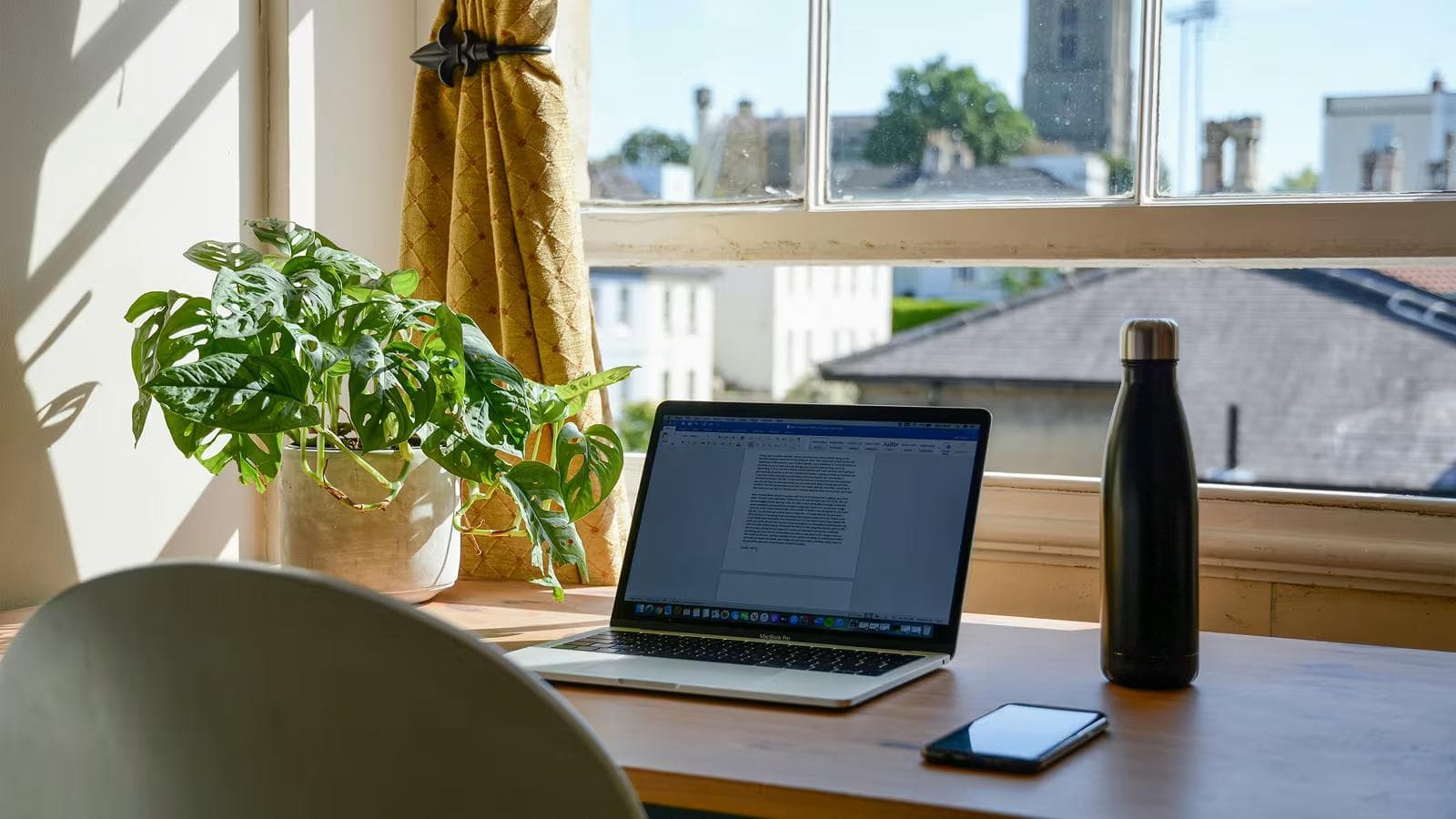
Working from home can be one of two things. Either it becomes the most productive setup of your career, with fewer interruptions, fewer meetings, and more time for deep work. Or it becomes a slow drift into distracted, low-output days where you finish the week unsure of what actually got done.
The difference is rarely about willpower. Remote work productivity comes from a few small habits that compound: workspace setup, schedule design, communication, and the daily rituals that protect your focus. Below are 10 productivity tips for remote workers that hold up across job types, experience levels, and personality types. None of them require expensive tools or hours of setup. They just require running the same playbook every day.
1. Set up a dedicated workspace
Your brain associates physical spaces with activities. If you work, eat, and relax in the same spot, focus suffers because your environment never signals which mode you're in. You don't need a separate office or expensive setup. A consistent corner with a desk, a chair, and decent light is enough.
The key is using that space only for work. Don't eat there, don't watch shows there, don't scroll your phone there in the evening. The exclusivity is what makes the brain switch into focus mode the moment you sit down.
2. Keep a consistent start time
Flexible hours don't mean random hours. The biggest productivity drain in remote work isn't long days, it's days that never really start. You drift through a morning of half-checked emails, get to your first real task at 11 AM, and feel behind for the rest of the day.
Pick a start time and protect it. Your end time gets defined as a natural result, which matters even more than when you start.
3. Get ready like you're leaving the house
Shower, change clothes, brush your teeth. Working in pajamas sounds appealing but signals "rest" to your brain. Wearing real clothes is a small ritual that flips you into work mode, even if no one else will see you.
This doesn't mean a suit. Comfortable clothes that you wouldn't sleep in are enough. The shift in what you're wearing is the signal, not the formality.
4. Time-block your calendar
If you don't book time for focused work, meetings and Slack will fill the day. Block two to three hours every morning for deep work before the rest of the team is fully online, and protect those blocks the same way you'd protect a meeting.
The work that needs concentration always loses to the work that demands attention. Calendar blocks force the trade-off, so the deep work actually gets done instead of being squeezed into whatever time is left.
5. Take real breaks, not phone breaks
Scrolling Instagram between tasks isn't a break, it's a context-switch. Your brain doesn't get to rest because it's still processing input, just from a different source. The fatigue you feel after a "break" of scrolling is the cost of that switch.
Real breaks involve stepping away from screens entirely. Walk outside, eat without your phone, stretch, talk to someone in person if you can. Your focus recovers faster after 10 minutes of nothing than 30 minutes of more input.
6. Manage notifications aggressively
Slack, email, and texts should not interrupt you constantly. Most companies don't expect a 30-second response time, even if their tools imply they do. The expectation is set by the team norm, not the notification.
Set focused hours where notifications are silenced entirely. Check messages on your schedule, not the app's. Two or three batched check-ins a day is enough for most roles, and the deep work you get done in between is what your manager actually notices.
7. Communicate more, not less
Async communication breaks down when people stop sharing context. In an office, your manager sees your work happening, hears your conversations, and picks up on what you're stuck on. Remotely, none of that happens unless you put it in writing.
Send a short daily update on what you're working on, what's blocked, and what you'll get to next. Over-communication is the default in good remote teams. The cost of a slightly longer message is much lower than the cost of a teammate being out of the loop.
8. End your day with a shutdown ritual
Close all your tabs, write down your top three tasks for tomorrow, and log off. The ritual creates a hard boundary between work and rest, which matters more when both happen in the same building.
Without a shutdown, work bleeds into the evening. You check Slack at 9 PM, answer one email, and suddenly you're working again. The next morning starts blurry because your brain never fully disengaged. A two-minute ritual is the cheapest fix for this.
9. Move during the day
Eight hours of sitting kills energy faster than any task could. Get up every 60 to 90 minutes, even if it's just to walk to the kitchen and back. A 10-minute walk between meetings does more for focus than another coffee.
Movement also improves sleep, which fixes the next day's productivity before it starts. If you're tired by 3 PM every day, the cause is usually sitting still all morning, not the work itself.
10. Match your schedule to your energy
Remote work lets you choose when to do what. If you're sharpest at 7 AM, do deep work then and save email for the afternoon. If you focus better at 9 PM, design around that. The biggest waste of remote flexibility is structuring your day exactly like an office day, with deep work crammed between meetings instead of around your actual energy.
Track your focus for a week. Note when you feel sharp and when you feel slow. Then rebuild your week around those patterns. Most people are surprised by how much of their day is spent doing the wrong work at the wrong time.
Frequently Asked Questions About Remote Work Productivity
1. How can I be more productive working from home?
The biggest gains in work from home productivity come from systems, not effort. Set up a dedicated workspace, protect deep work hours by blocking time on your calendar, and use a shutdown ritual to separate work from rest. These three habits remove most of the friction that makes home a difficult place to focus.
2. What's the biggest productivity killer when working remotely?
Constant context-switching. Slack, email, group chats, and texts add up to dozens of interruptions a day. Most people respond to each within seconds, which destroys the deep work that drives real output. The fix is batching: check messages at set times, not whenever they arrive.
3. How do I stay productive while working from home without burning out?
Burnout in remote work usually comes from missing boundaries, not from working too hard. End your day at a consistent time, take real lunch breaks away from your screen, and don't check email on weekends. The lack of a commute means there's nothing physically separating work from life, so you have to build that separation yourself with a shutdown ritual and a fixed end time.
4. Is it better to work from a coffee shop or at home?
It depends on the task. Coffee shops work well for emails, calls, and lighter tasks where ambient noise helps. They're worse for deep work that requires extended focus, since you're at the mercy of who walks in and how loud the espresso machine is. Most remote workers do best with a home base for deep work and occasional coffee shop days for variety.
5. How many hours should I actually work remotely?
The same as you would in an office. Most full-time remote roles are designed around 35 to 40 hours a week of focused work. The flexibility of remote work isn't about working fewer hours, it's about choosing which hours. Trying to work 12-hour days at home leads to burnout faster than it would in an office, because there's no commute or change of scenery to mark the end of the day.
Remote Work Productivity Starts With Habits
The best part about remote work is the freedom to design your day around the work that actually matters. Most people lose that freedom by treating their home like an office, keeping the same rigid schedule and worse focus conditions. The 10 work from home productivity tips above are the systems that hold up across roles, industries, and personality types. Pick one, build the habit, then add the next. And if you're looking for a remote role that lets you actually use these habits, browse open positions on RemoteAtlas, free for job seekers.
Aravind Aby
Aravind Aby is the Founder of RemoteAtlas. With experience across marketing, sales, and product development, he has helped startups acquire customers, build their brands, and scale from the ground up, while also launching products of his own. He founded RemoteAtlas with a vision of normalizing remote work and the digital nomad lifestyle, where professionals can live and work from anywhere in the world without being constrained by geography.
RemoteAtlas Blog
More articles you'll love
Insights, tips, and strategies for remote work and career growth.

High Paying Remote Jobs in 2026: What They Pay and How to Get Them
Six-figure remote jobs are no longer limited to Silicon Valley engineers. Here are the high paying remote jobs in 2026, what they actually pay, and the steps to land one from anywhere.
How to Get a Remote Job in 2026: Step-by-Step Guide
Getting a remote job in 2026 takes targeting the right roles, applying early, and showing specific results. This step-by-step guide covers job sites, resumes, interviews, and offer evaluation.
Stay in the loop
Remote jobs & insights, straight to your inbox
Weekly roundups of the best remote roles, hiring trends, and career tips for remote workers worldwide.